Under the Qatar labor law end-of-service gratuity rules, every construction worker who completes at least one full year with the same employer is legally owed a lump-sum payment when the job ends. Yet thousands of workers on building sites, road projects, and infrastructure schemes across Doha, Lusail, Al Wakrah, and the Industrial Area leave the country every year without collecting what they are owed, or accept a figure far lower than the law requires. This guide explains, in plain language, what the gratuity is, how it is calculated, who qualifies, and exactly how to claim it if your company refuses or delays payment.
Everything below is based on Labour Law No. 14 of 2004 and its amendments, including Decree-Law No. 18 of 2020 and the most recent change, Law No. 9 of 2026, which rewrote the dispute-settlement route that gratuity claims must follow.
What is end-of-service gratuity under Qatar labor law?
End-of-service gratuity (often written as EOSG or EOSB, and known to many South Asian workers simply as “gratuity” or “benefit”) is a one-time payment the employer must make to a worker when the employment contract ends. It sits on top of your final month’s wages, unused annual leave pay, and your return air ticket. It is not a tip, a bonus, or a reward for good behaviour. It is a statutory right written into Article 54 of the Labour Law.
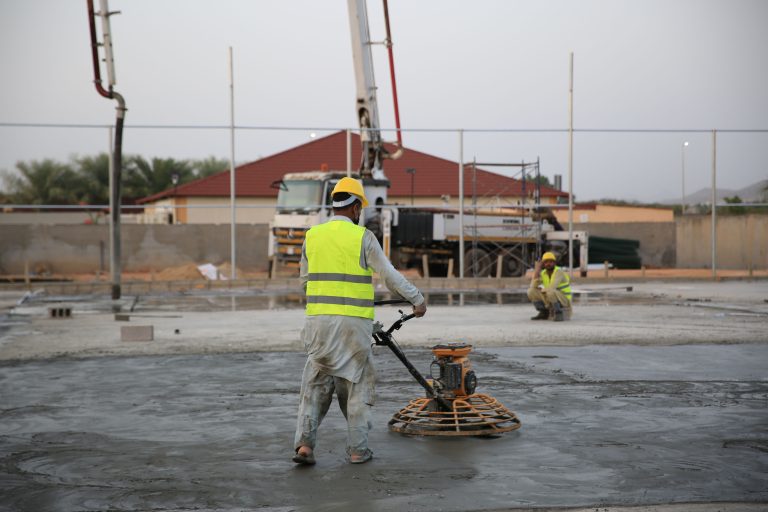
For construction workers, this matters more than for most. Building and infrastructure jobs in Qatar are typically fixed-term, tied to a specific project, and renewed year after year. Many labourers, masons, carpenters, steel fixers, scaffolders, and heavy-equipment operators spend five, eight, or even twelve years with one contractor. Over that length of service, the gratuity can amount to several months’ pay.
The Labour Law covers almost all private-sector construction employment in Qatar. It does not cover government employees, the military and police, domestic workers (who have a separate law), or, since Law No. 9 of 2026, part-time and freelance workers. If you are on a standard sponsored employment visa with a construction, contracting, or manpower company, you are covered.
Who qualifies for end-of-service gratuity?
The rule is simple: you must have completed one full year of continuous service with the same employer. If you leave or are dismissed before reaching twelve months, no gratuity is due, although you are still owed your wages and leave pay.
A few points that construction workers frequently get wrong:
- Resigning does not cancel your gratuity. Article 54 does not reduce the rate for a worker who quits. Whether you resign, your contract expires, or the company terminates you, the entitlement is the same once you pass one year.
- Transferring to a new employer still triggers payment. Since the 2020 reforms removed the need for a No Objection Certificate, many workers change jobs within Qatar. Your old employer must settle your gratuity when you leave, even if you are staying in the country.
- Project-to-project renewals count as continuous service. If your contract is renewed or you are moved between sites by the same company, the clock keeps running from your original start date.
- Short gaps may not break continuity. If your contract ended for any reason other than a disciplinary dismissal and you were rehired within two months, the law treats your service as continuous.
How to calculate your end-of-service gratuity in Qatar
The Qatar labor law end-of-service gratuity formula is based on three elements: your last basic wage, a minimum rate of three weeks’ pay per year of service, and your total years of service, including part years calculated proportionally.
Step 1: Identify your basic wage
This is the single most important and most misunderstood detail. The gratuity is calculated on basic wage only. Housing allowance, food allowance, transport allowance, overtime, site allowance, and bonuses are excluded. If your contract shows a total of QAR 1,800 but a basic salary of QAR 1,000, the gratuity is worked out on QAR 1,000.
Qatar’s minimum wage law (Law No. 17 of 2021) requires a basic wage of at least QAR 1,000 per month, plus QAR 300 for food and QAR 500 for accommodation if the employer does not provide them directly. Many construction labourers are paid exactly at this floor, so their gratuity is calculated on QAR 1,000.
Always check the figure registered in the Wage Protection System (WPS). The basic wage the employer reports to the Ministry through WPS is the evidence base for any dispute.
Step 2: Apply the three-week rule
The most widely used formula treats a month as 30 days and three weeks as 21 days:
Gratuity = (Last monthly basic wage ÷ 30) × 21 × Years of service
Step 3: Worked examples for construction workers
Example 1 – General labourer, minimum basic wage Basic wage: QAR 1,000 | Service: 5 years Daily rate = 1,000 ÷ 30 = QAR 33.33 21 days × 33.33 = QAR 700 per year Total gratuity = 700 × 5 = QAR 3,500
Example 2 – Skilled mason Basic wage: QAR 1,500 | Service: 6 years and 6 months Per year: (1,500 ÷ 30) × 21 = QAR 1,050 Full years: 1,050 × 6 = QAR 6,300 Half year: 1,050 × 0.5 = QAR 525 Total gratuity = QAR 6,825
Example 3 – Site foreman Basic wage: QAR 3,000 | Service: 10 years Per year: (3,000 ÷ 30) × 21 = QAR 2,100 Total gratuity = 2,100 × 10 = QAR 21,000
Two further points. First, three weeks per year is the legal minimum. Your contract or company policy may promise more, and if it does, the higher figure applies. There is no upper cap in the law. Second, if your basic wage increased over the years, the calculation uses the final basic wage for every year of service, not an average.
The Ministry of Labour offers an online gratuity calculator on its official portal, and several free third-party calculators exist. Use them to double-check any figure your company presents.
When must the company pay?
Under Article 67, your final wages and all other dues, including the gratuity, must be paid by the end of the working day after your contract ends. If you walked off the job without giving proper notice, the employer has up to seven days. An employer that misses this deadline faces a fine of QAR 2,000 to QAR 6,000 and up to one month’s imprisonment under Article 145.
In practice, many construction companies settle gratuity at the time of final exit, when the worker’s visa is cancelled and the ticket home is issued. Do not sign a final settlement document, a “no claims” letter, or any receipt in a language you cannot read until you have confirmed the gratuity figure is correct.
Can a construction company refuse to pay gratuity?
Only in narrow circumstances. Article 61 lists the specific cases where an employer may dismiss a worker without notice and without gratuity. These include submitting forged documents, disclosing company secrets, causing serious financial loss through deliberate error, repeated breaches of written safety rules after a warning, being drunk or under the influence of drugs at work, assaulting the employer or a colleague, and being absent without a valid reason for more than seven consecutive days or fifteen separate days in a year. Law No. 9 of 2026 added inciting an unlawful strike that disrupts the business.
If the employer cannot show that your dismissal falls squarely within one of these cases, your gratuity is still due. Construction workers are sometimes told that an “absconding” report, a minor site accident, or a dispute with a supervisor cancels their benefits. That is usually untrue.
The employer may, however, deduct amounts you genuinely owe the company, such as an unpaid loan or advance. It cannot deduct recruitment fees, visa costs, or medical-check costs, since the law prohibits charging these to the worker in the first place.
Workers who leave early because the employer failed in its own duties, for example by not paying wages on time, using violence, or ignoring a serious safety hazard on site, keep their full gratuity under Article 51.
How to claim end-of-service gratuity benefits: step-by-step
If your company has not paid, has underpaid, or is stalling, follow this process. Since Law No. 9 of 2026 rewrote Article 115 bis, the sequence is now fixed and mandatory.
Step 1: Gather your evidence
Collect your employment contract (the Ministry-attested version if possible), your Qatar ID, passport copies, WPS salary transfer records or bank statements, pay slips, your visa issue date and any renewal dates, and any written communication about your termination or resignation. Take photographs of everything on your phone and back them up.
Step 2: Raise it with the company in writing
Send a short, dated written request to HR or your camp boss stating your start date, end date, basic wage, and the gratuity figure you calculate. Keep a copy. This is not legally required before filing a complaint, but it creates a record and sometimes resolves the matter.
Step 3: File a complaint with the Ministry of Labour
You can lodge a labour complaint free of charge through several channels:
- Hotline 16008 – operates in Arabic, English, and several South Asian languages
- SMS to 92727 – a text-based complaint service
- The Unified Platform for Complaints and Whistleblowers on the Ministry’s website
- In person at a Ministry of Labour office or at one of the self-service kiosks
You do not need a lawyer. Workers’ claims are exempt from court fees.
Step 4: Amicable settlement stage
Under the amended Article 115 bis, the complaint first goes to the Ministry’s competent department, which tries to reach a settlement between you and the employer within seven days. If both sides agree, you sign settlement minutes that the department certifies. Do not sign if the figure is wrong; once certified, the settlement is binding.
Step 5: Referral to the Labour Dispute Settlement Committee
If no agreement is reached, or the employer refuses to engage, the department must refer the case within three working days to a Labour Dispute Settlement Committee. The committee is chaired by a judge and must issue a decision within three weeks of its first hearing. Its decision is immediately enforceable.
Step 6: Appeal (if needed)
Either side can appeal to the Court of Appeal within 15 days. Unless the court orders otherwise, the committee’s decision can still be enforced while the appeal runs, so a successful worker does not have to wait.
Step 7: Payment through the Workers’ Support and Insurance Fund
Qatar established a Workers’ Support and Insurance Fund (Law No. 17 of 2018) to pay workers’ dues when a committee rules in their favour but the employer fails to pay, for example because the company has collapsed or its owner has fled. The fund then recovers the money from the employer. This is especially relevant in construction, where subcontractors sometimes shut down abruptly.
Important deadlines and warnings
- One-year limitation period. Under Article 10, any claim under the Labour Law or your contract must be filed within one year of the contract ending. Filing with the Ministry pauses this clock while the settlement process runs. Do not let a year pass while waiting for promises.
- Do not leave Qatar before filing. You can pursue a case from abroad, but it is far harder. If you must exit, file the complaint first and appoint a representative or lawyer if possible.
- Keep your Qatar ID valid where possible. Workers in an active dispute can request assistance with residence status from the Ministry so that they are not treated as overstayers.
- Beware of “settlement” agents. Some individuals in labour camps offer to recover gratuity for a cut. The official process is free. You do not need to pay anyone.
Frequently asked questions
Is gratuity calculated on total salary or basic salary in Qatar? Basic salary only. Allowances and overtime are excluded.
Do I get gratuity if I resign after two years? Yes. Resignation does not reduce the entitlement once you have completed one year.
What if my company changed its name or was taken over? Your service with the original entity generally carries over. Keep records of the transfer and raise it in your complaint.
Can the company pay gratuity in instalments? The law requires full payment with your final dues. Instalments are only acceptable if you voluntarily agree, and you should get such an agreement in writing with clear dates.
My contract says “no gratuity.” Is that valid? No. Any contract term that gives a worker less than the Labour Law provides is void. The three-week minimum applies regardless of what you signed.
What happens to gratuity if a worker dies in service? Under Article 55, the employer must deposit the wages, dues, and gratuity with the competent court within 15 days, with a written calculation, so that the family can claim it.
Final thoughts
The Qatar labor law end-of-service gratuity is one of the few guaranteed financial protections construction workers have at the end of years of hard, often dangerous work. The calculation is straightforward, the right cannot be signed away, and the claims process is free and designed to conclude within weeks rather than years. Know your basic wage, know your start date, keep your documents, and if your employer does not pay what the law requires, use the Ministry of Labour’s complaint system before the one-year deadline passes.
Related guides
 Qatar Construction GuideClaim What You’re Owed: How to Navigate Qatar Construction Labour Benefits in 2026
 Saudi Construction GuideSaudi Labor Law Guide: How Construction Workers Can Check Their End-of-Service Benefits
 UAE Construction GuideMaximize Your Perks: How to Access and Claim All Your UAE Construction Worker Benefits
Pingback: Qatar Sick Leave and Medical Compensation Rights for Construction Workers